Kisinga Safaris
Lake Mburo National Park
Lake Mburo is Uganda's smallest savannah national park, at around 370 square kilometres, and the closest to Kampala.
Overview
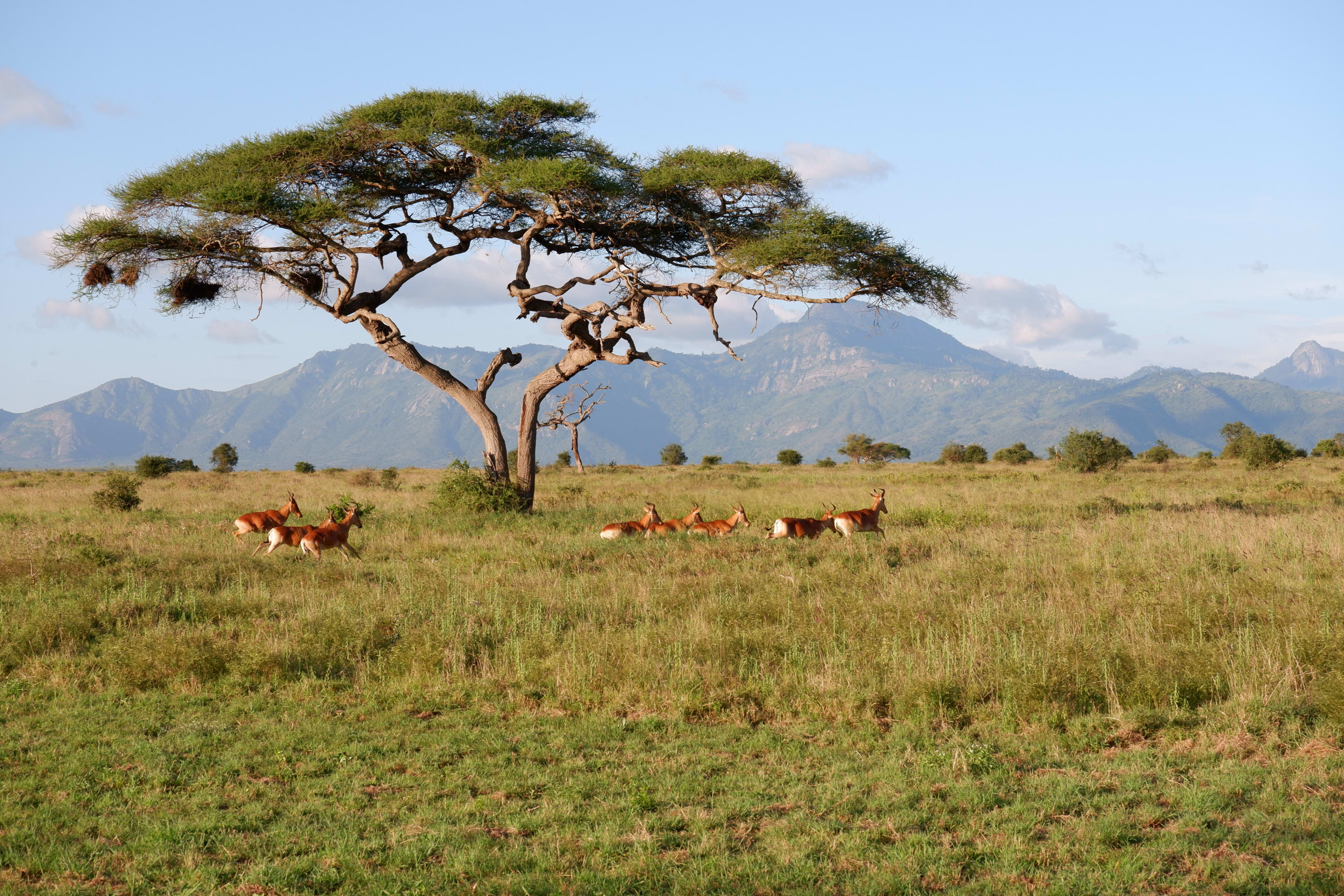
Lake Mburo is Uganda's smallest savannah national park, at around 370 square kilometres, and the closest to Kampala. It is one of the few Uganda parks with plains zebra, and it is the only place in the country where you can see eland and impala in good numbers alongside topi, waterbuck, buffalo and giraffe. The park takes in five lakes in total, along with the acacia woodland and rolling grassland typical of the wider Ankole cattle-keeping region it sits within.
The park's low predator density, with few or no lions and a small population of leopards, is what makes it one of the few Uganda parks where guided walking, cycling and horseback safaris are offered alongside conventional game drives. Walking among zebra and antelope with a ranger gives a very different sense of scale and detail from a vehicle, and it is easily the most intimate safari experience available this close to the capital.
Birders also rate Lake Mburo highly. The acacia belt holds species that are hard to find elsewhere in Uganda, including the red-faced barbet and the African grey hornbill, and the wetlands attract papyrus specialists, with the shoebill occasionally recorded in the swamps. A boat trip on the lake adds hippos, crocodiles, fish eagles and several kingfisher species.
Top experiences
- Walking safari among zebra, impala and eland
- Guided cycling safari through the park
- Boat trip on Lake Mburo to see hippos and water birds
- Horseback safari past grazing zebra and antelope, a Lake Mburo speciality
- Night game drive with a ranger and spotlight to look for nocturnal species
- Birding in the acacia woodland for species rare elsewhere in Uganda
- Visit to a local Ankole cattle-keeping community to learn about the region's long-horned cattle
Best time to visit
Dry seasons (December to February and June to August) give the easiest wildlife viewing, though the park is open year-round and the grass is greener and birding stronger in the wetter months.
Because Lake Mburo is easy to reach, it works well as a first-night stop on the way west or a last-night stop on the way back. Early mornings and late afternoons are the best times for wildlife in any season, and the midday heat is better spent by the lodge pool.
Getting there
Around 3 to 4 hours' drive southwest of Kampala on a tarmac road, often visited as a stop en route to or from Bwindi or Mgahinga rather than a standalone trip.
The drive crosses the equator at Kayabwe, where there is a photo stop with the equator monument, and passes through Masaka, a good place to stop for lunch or a roadside snack of grilled meat and fresh fruit.
Where to stay
Lake Mburo has a mix of tented camps inside the park, budget bandas near the main gate, and a few lodges on the lakeshore itself, generally more affordable than the gorilla trekking parks.
Staying inside the park lets you start an activity at dawn without a drive, and many camps overlook waterholes where zebra and buffalo come to drink in the evening. Lodges just outside the boundary offer cheaper rates and are a short drive from the gate.
The easiest savannah park from Kampala
Lake Mburo National Park covers about 370 square kilometres of rolling acacia savannah, wetlands and woodland around its namesake lake. It is Uganda's closest savannah park to Kampala, only around four hours by road, and one of the few places where you can see zebras, impala, eland, topi and warthogs on foot. It is compact, quiet and relaxed, which makes it an excellent first stop on the way to the south-west or a short break from the capital.
Things to do
- Game drives: the park's open plains are good for zebras, impala, eland, topi, buffalo, waterbuck and warthogs, with leopards and hyenas more elusive.
- Boat trip on Lake Mburo: a quiet cruise to see hippos, crocodiles and a rich variety of waterbirds, including fish eagles, pelicans and kingfishers.
- Walking safaris: guided walks with armed rangers let you approach zebras and antelope at a gentle pace, which is rare in Uganda's parks.
- Horseback safaris: available at some lodges, with horses moving quietly among the wildlife.
- Night drives: a good way to see nocturnal animals such as genets, civets and bushbabies.
- Birding: more than 300 bird species include the red-faced barbet, African fish eagle and crested francolin. See our guide to birdwatching in Uganda.
- Cultural stops: the Ankole region is known for its long-horned cattle, and you can visit a cultural centre or homestead on the way.
Wildlife
Giraffes have been introduced to the park, and you may see them on the plains. Elephants and rhinos do not live here, but the variety of antelope and birds make up for it. For a broader overview, read wildlife you can see on a Uganda safari.
Getting there and where it fits
Lake Mburo lies on the main road from Kampala towards Mbarara, Kabale and Bwindi, so it is a natural overnight stop on a gorilla trip. The drive from Kampala takes about four hours, and it is easy to combine with Bwindi and Lake Bunyonyi. It can also be done as a long weekend from Kampala, and our safaris for East African residents include short breaks like this.
When to visit
The park is rewarding all year. In the dry seasons, animals concentrate near the lake and waterholes, and in the wetter months the park is greener and quieter. See our seasons guide for more.
Practical tips
- Allow at least one night, or two if you want to do a game drive, boat trip and walking safari.
- Wear neutral clothing, sturdy shoes and a hat. See our packing list.
- Walking safaris and night drives need to be booked in advance.
- Check current park fees on the Uganda Wildlife Authority website, and see our cost guide for how fees add up.
Browse our wildlife and game drive safaris or request a short trip through the trip planning page.
Frequently asked questions
Why does Lake Mburo offer walking safaris when other parks do not?
Lake Mburo has few or no lions, and its wildlife is dominated by antelope and zebra, which makes guided walking, cycling and horseback safaris with an armed ranger possible. Most other Uganda savannah parks hold large predator populations and restrict visitors to vehicles.
How long should I spend at Lake Mburo?
A single night is enough to see the highlights, and many itineraries use it as a stopover. Two nights lets you combine a game drive, boat trip and a walking or cycling safari without rushing.
Is Lake Mburo good for children?
Yes. It is compact, the drive from Kampala is relatively short, and activities such as boat trips, guided walks and short game drives suit families, though minimum ages apply for some activities such as horseback safaris.